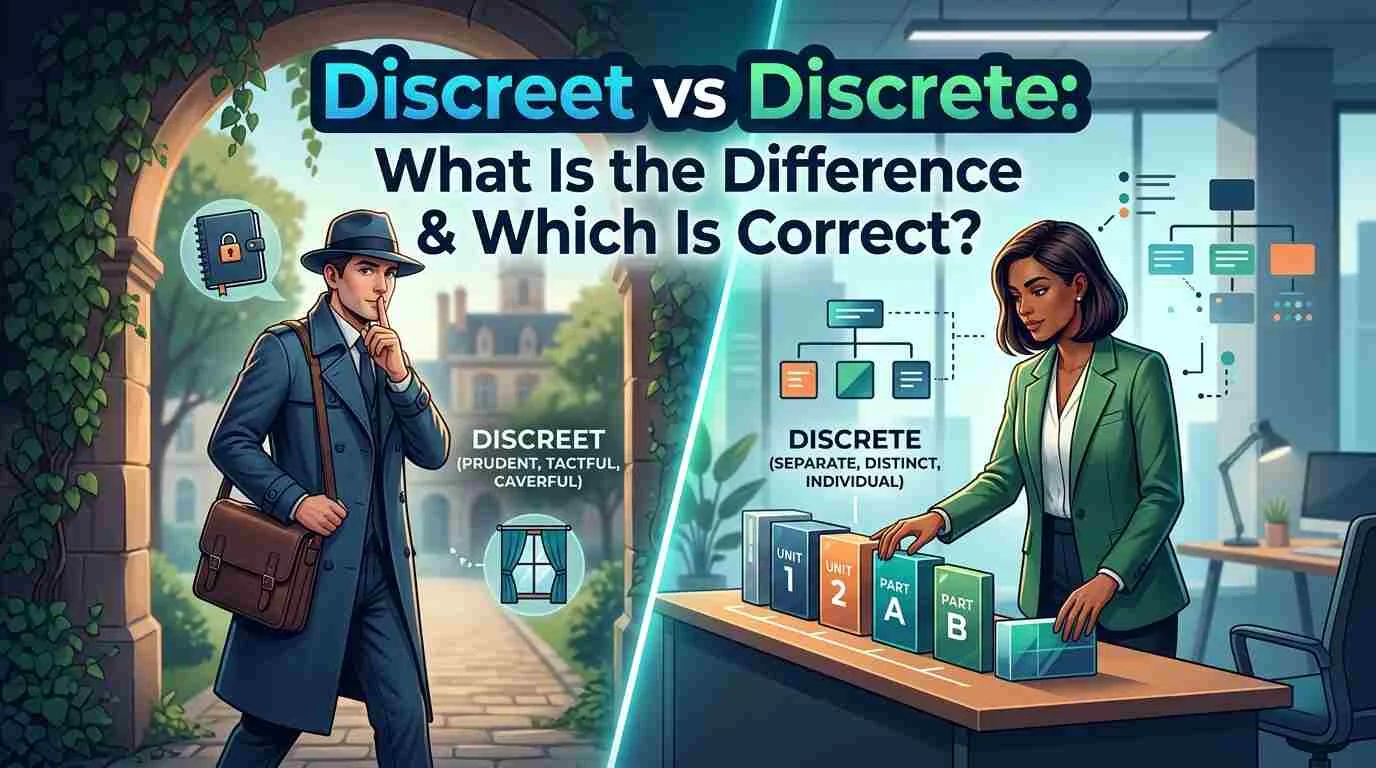
Discreet vs Discrete: What Is the Difference & Which Is Correct?
Many English learners confuse discreet and discrete because they look and sound very similar. However, they have completely different meanings and are used in different … Read More
Many English learners confuse discreet and discrete because they look and sound very similar. However, they have completely different meanings and are used in different … Read More
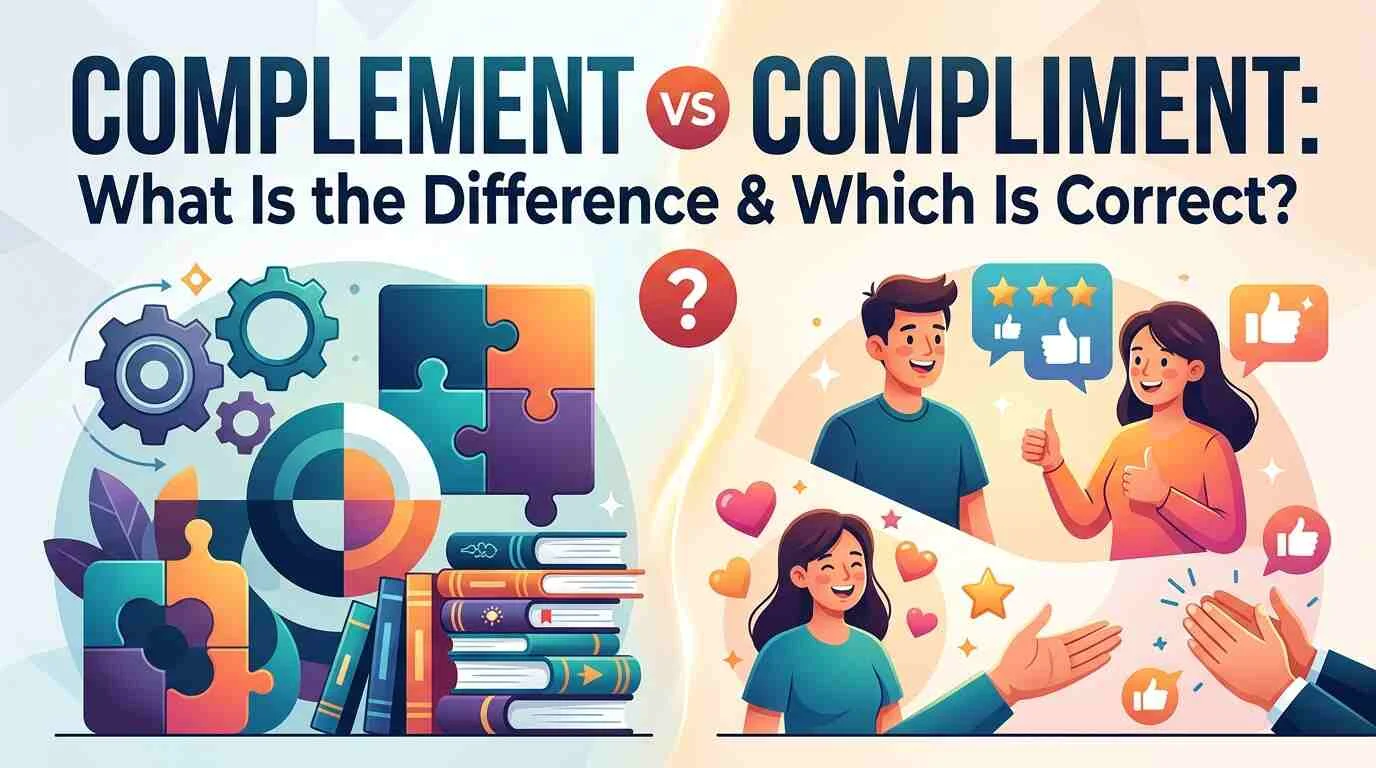
Many English learners confuse complement and compliment because they sound exactly alike. However, these two words have completely different meanings and are used in different … Read More
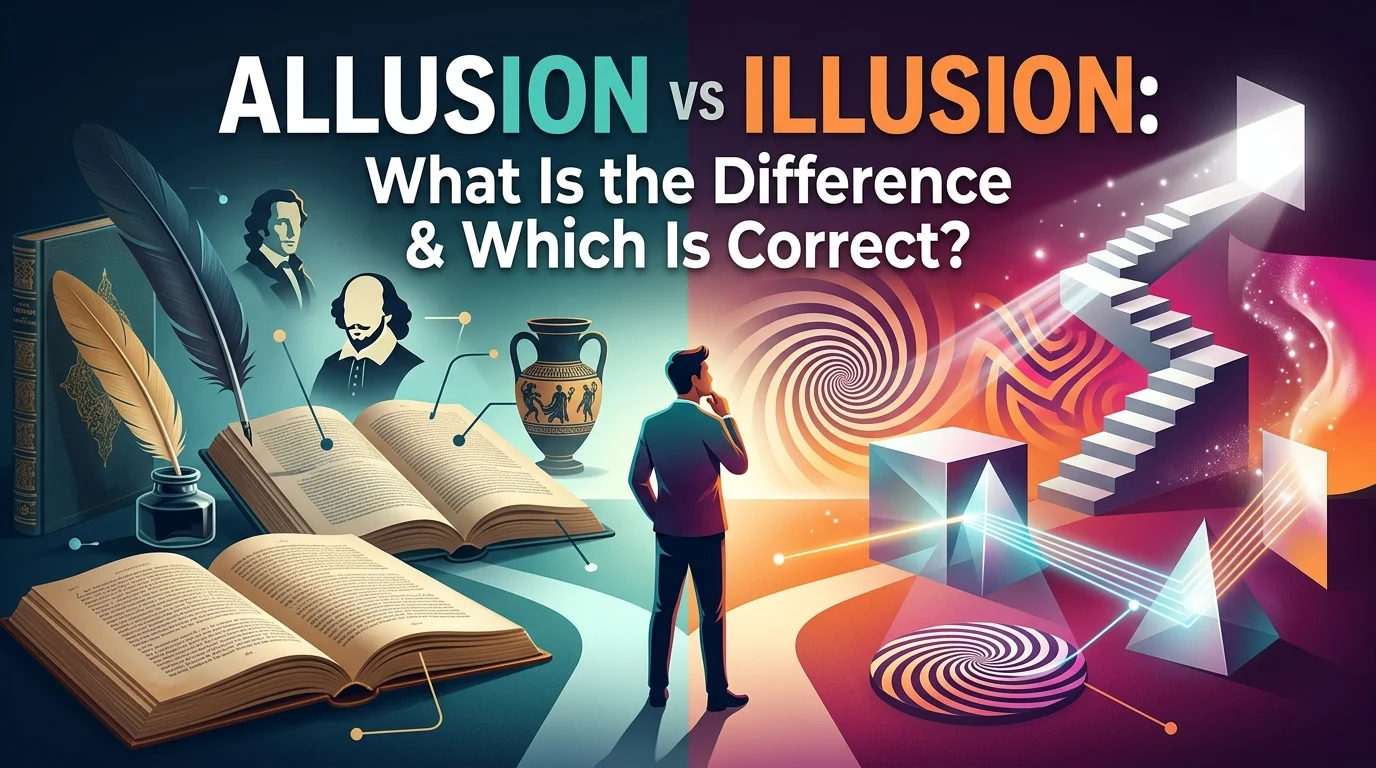
Many English learners confuse allusion and illusion because they sound very similar. However, these two words have completely different meanings and are used in different … Read More
Many English learners confuse perspective or prospective because they look and sound similar. However, they have very different meanings and are used in different situations. … Read More
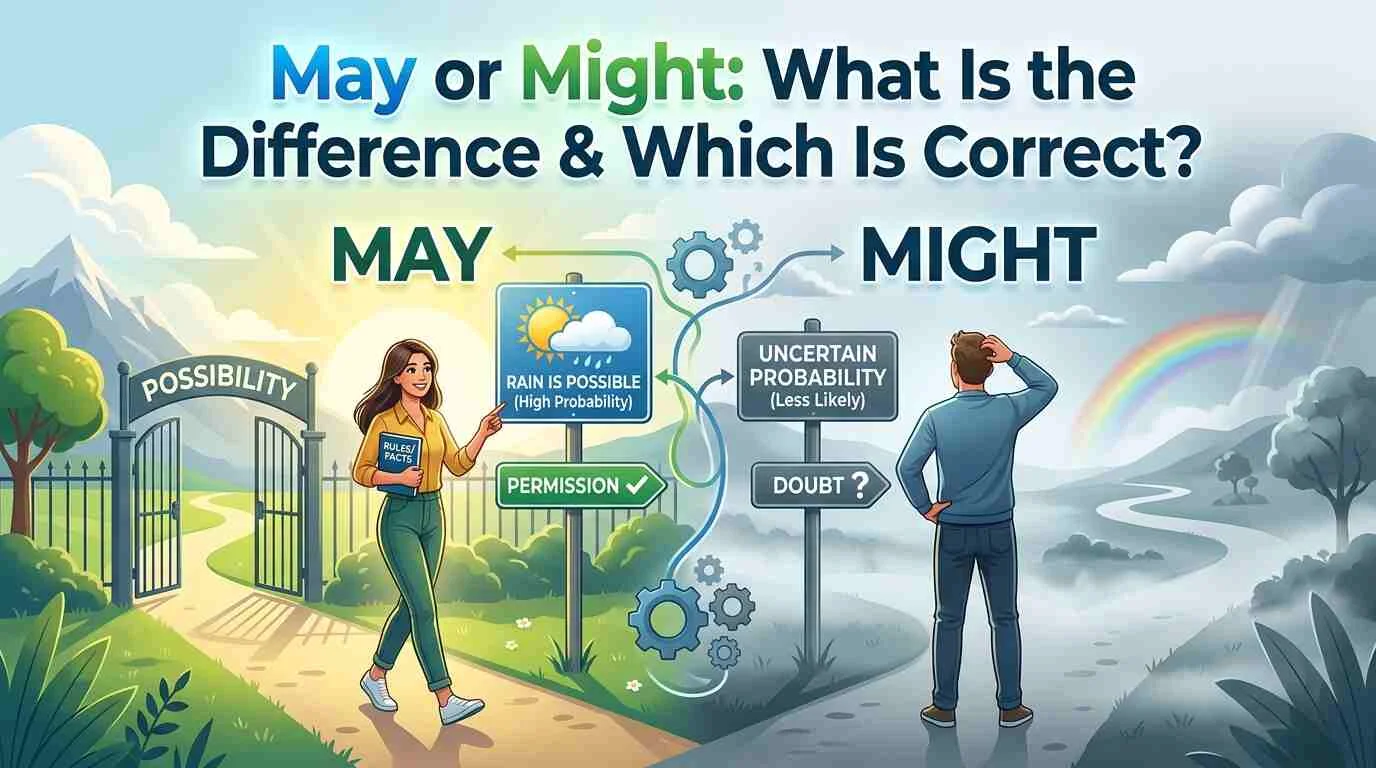
When learning English, may and might are two modal verbs that often confuse learners because both can express possibility. While they are similar in many … Read More

Finding the right way to describe something simple can make your writing more vivid and engaging. Best Similes for Easy help readers instantly understand how … Read More
“Northeast” and “North East” both refer to the direction between north and east, but their spelling depends on the writing style, context and regional convention. … Read More
A smile can express happiness, kindness, confidence, comfort or even mystery without saying a single word. That is why writers often use similes to describe … Read More

Feeling alone is a universal experience, and the right simile can make that feeling easier to understand and express. Best Similes For Alone help writers, … Read More
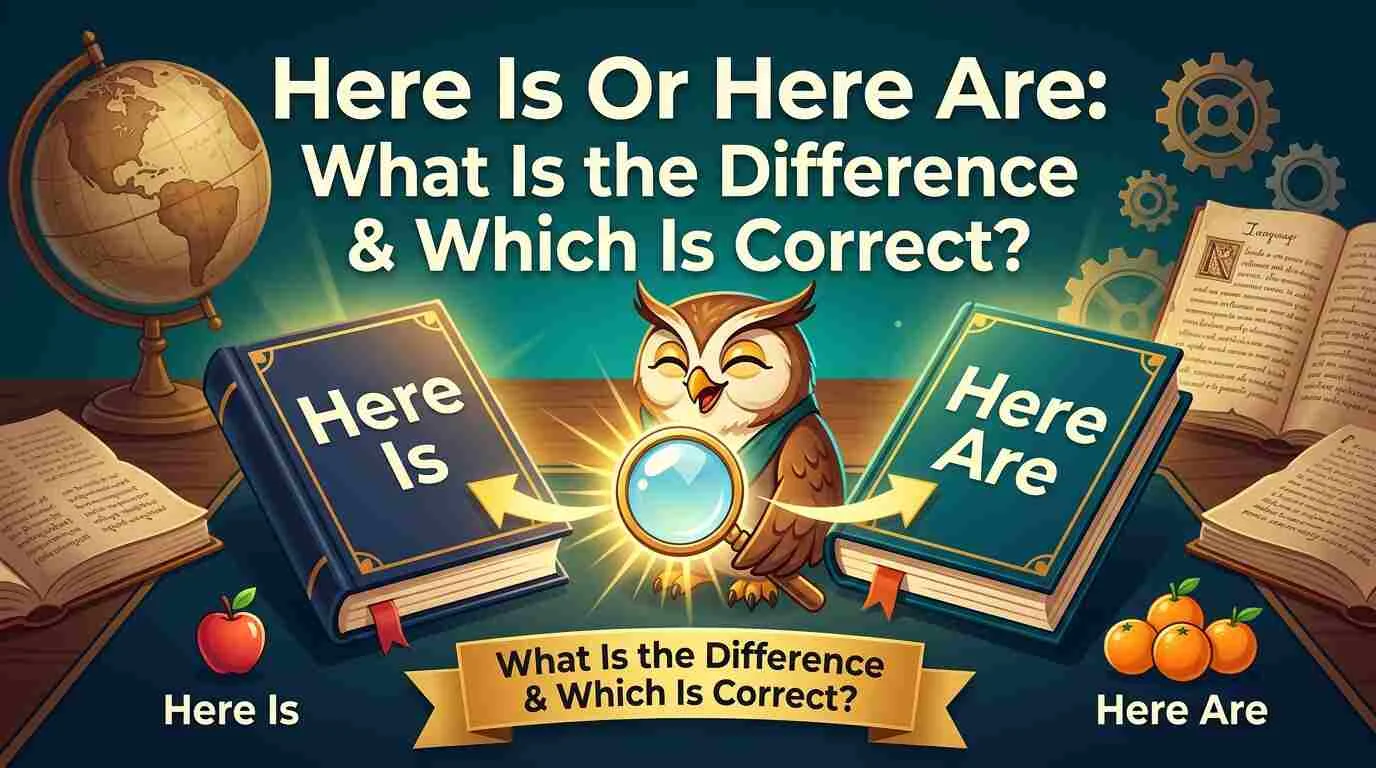
Choosing between here is or here are can seem confusing, especially for English learners. Both expressions introduce something or someone, but they follow different grammar … Read More
We provide clear, practical, and easy-to-understand language resources to help students, writers, professionals, and lifelong learners communicate with greater accuracy and confidence.
Contact Us