
Flowers have inspired writers, poets and storytellers for centuries. Their beauty, fragrance and symbolism make them perfect for creating vivid comparisons. Flower-Based Similes help you describe people, emotions, places and moments freshly and memorably.
Whether you’re writing poetry, stories, essays, speeches or social media captions, these similes can make your words more expressive and engaging. In this guide, you’ll learn what flower similes are, why they matter, the different types you can use, and practical tips for writing them effectively.
Definition:
These similes are comparisons that use flowers to describe a person, object, feeling or situation by using words such as “like” or “as.” They create vivid mental images, making descriptions more colorful, emotional, and easy to understand.
For example, instead of saying someone is beautiful, you might say, “She is as radiant as a sunflower.” This paints a stronger picture for the reader.
What Is a Simile?
A simile is a figure of speech that compares two different things using the words like or as. Writers use similes to make descriptions clearer, more creative and easier to imagine.
Example
- Her smile was like a blooming rose.
- He stood as tall as a sunflower reaching for the sky.
- The garden looked like a field of colorful tulips.
- Her kindness spread like the sweet scent of jasmine.
- The child laughed like blossoms dancing in the breeze.
- Their friendship was as strong as an ancient oak beside wildflowers.
- The sunset glowed like a garden full of lilies.
- Her voice sounded as soft as flower petals.
- Hope bloomed like daisies after spring rain.
- His heart opened like a flower greeting the morning sun.
Why Use Flower Similes in Writing?
Using Flower Similes adds life and emotion to your writing. They help readers connect with your ideas through familiar and colorful images.
- Create vivid mental pictures.
- Make descriptions more memorable.
- Add emotion without using complicated words.
- Improve storytelling and creative writing.
- Enhance poetry with graceful comparisons.
- Make speeches and presentations more engaging.
- Strengthen essays with descriptive language.
- Help readers connect with characters and settings.
- Add elegance to social media captions and greeting cards.
- Keep readers interested with fresh imagery.
Types of Similes
Not all flower similes serve the same purpose. Some describe beauty, while others express emotions or capture the beauty of nature. Understanding these types helps you choose the right comparison for your writing.
Beauty Similes
Beauty similes compare someone’s appearance or charm to the elegance of flowers. They often create gentle, graceful and positive descriptions.
Example
- She was as lovely as a blooming rose.
- His smile shone like a sunflower in summer.
- Her face glowed like a fresh lily at sunrise.
- She looked as graceful as an orchid in bloom.
- The bride appeared like a field of colorful tulips.
Emotion Similes
Emotion similes use flowers to express feelings such as happiness, hope, love, sadness, or peace. They make emotions easier to imagine.
Example
- Her happiness bloomed like spring flowers.
- His hope grew like a sunflower turning toward the sun.
- Love spread like the fragrance of jasmine.
- Peace settled over the room like floating cherry blossoms.
- Joy opened like a daisy in the morning light.
Nature-Inspired Similes
Nature-inspired flower similes compare landscapes, weather, seasons, or natural scenes to flowers. They create rich visual imagery.
Example
- The valley looked like a blanket of wildflowers.
- Clouds floated like white blossoms across the sky.
- Morning arrived like flowers opening to sunlight.
- The meadow sparkled like a garden in full bloom.
- The hills rolled like endless fields of lavender.
Personality Similes
These similes compare a person’s character or behavior to the qualities of flowers, such as gentleness, resilience, kindness or cheerfulness.
Example
- She was as gentle as a violet.
- He remained as steady as a sunflower following the light.
- Her kindness spread like blooming daisies.
- The teacher welcomed everyone like an open flower.
- His patience grew like a slow-blooming peony.
Seasonal Similes
Seasonal flower similes highlight the connection between flowers and the changing seasons. They often symbolize renewal, growth or the passage of time.
Example
- Spring arrived like cherry blossoms after winter.
- Summer smiled like fields of bright sunflowers.
- Autumn faded like petals drifting in the wind.
- New beginnings bloomed like crocuses after snow.
- The year unfolded like a garden through the seasons.
Writing Tips and Common Mistakes
Strong flower similes feel natural and meaningful. The right comparison makes your writing vivid, while weak or overused similes can lessen the impact.
Useful Tips
- Choose flowers that match the feeling you want to express.
- Use familiar flowers so readers understand the comparison quickly.
- Keep similes short and easy to read.
- Match the tone of your writing with the flower you choose.
- Avoid forcing comparisons that do not make sense.
- Read your similes aloud to check their flow.
- Use original wording whenever possible.
- Mix common and uncommon flowers for variety.
- Let the simile support your message instead of distracting from it.
- Revise your work to remove unnecessary comparisons.
Common Mistakes to Avoid
- Using too many similes in one paragraph.
- Example: Every sentence compares something to a different flower, making the writing feel repetitive.
- Choosing flowers that do not fit the meaning.
- Example: Comparing strength to a delicate blossom without explanation.
- Copying overused comparisons without adding a fresh twist.
- Making similes too long or confusing.
- Mixing unrelated images in the same comparison.
- Forgetting to use like or as when writing a simile.
- Repeating the same flower throughout your writing.
- Using comparisons that interrupt the flow of your sentence.
- Ignoring your audience’s reading level by using overly complex language.
- Adding a simile where a simple description would be more effective.
30 Beautiful Flower Similes
As Beautiful as a Blooming Rose
Meaning: Exceptionally beautiful and graceful.
Detailed Explanation: This simile compares someone’s beauty to a rose in full bloom, symbolizing elegance, charm, and timeless appeal.
Tone: Romantic, poetic
Examples
- She looked as beautiful as a blooming rose on her wedding day.
- The little girl smiled as beautifully as a blooming rose.
- His painting captured a face as beautiful as a blooming rose.
Like a Sunflower Turning Toward the Sun
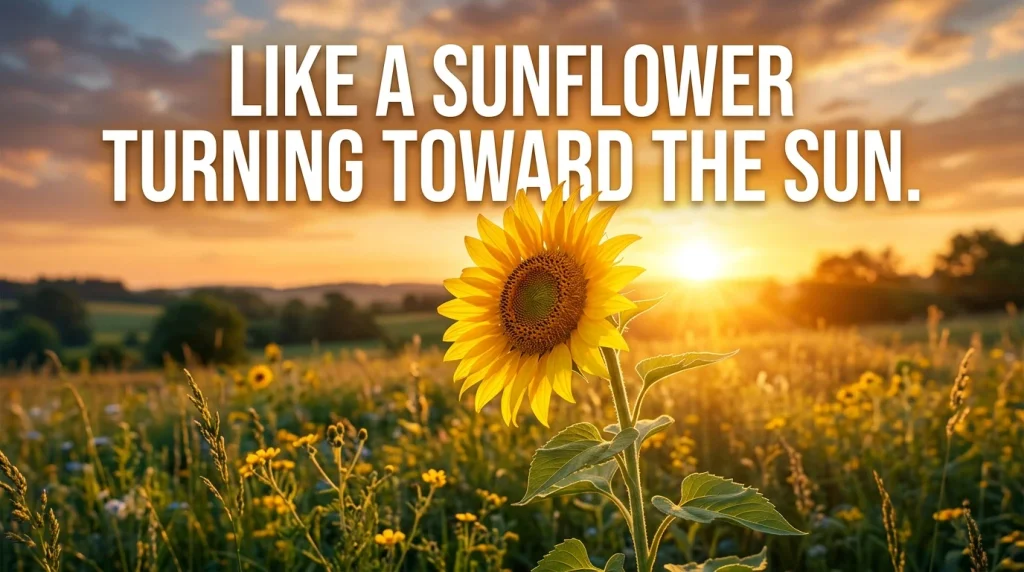
Meaning: Always positive, hopeful and optimistic.
Detailed Explanation: Just as sunflowers naturally face the sunlight, this simile describes someone who looks for the bright side of every situation.
Tone: Inspirational, uplifting
Examples
- She stayed like a sunflower turning toward the sun during difficult times.
- His hopeful attitude was like a sunflower turning toward the sun.
- The team remained like sunflowers turning toward the sun after their loss.
As Gentle as a Violet
Meaning: Very kind, soft and caring.
Detailed Explanation: Violets symbolize gentleness and humility, making this simile ideal for describing a calm and compassionate person.
Tone: Warm, affectionate
Examples
- My grandmother was as gentle as a violet.
- The nurse spoke as gently as a violet in the breeze.
- Her caring nature remained as gentle as a violet.
Like Cherry Blossoms Floating in the Breeze
Meaning: Delicate, peaceful and elegant.
Detailed Explanation: Cherry blossoms drifting through the air create a calm and graceful image, perfect for describing beauty or peaceful moments.
Tone: Peaceful, poetic
Examples
- Her dress flowed like cherry blossoms floating in the breeze.
- The dancers moved like cherry blossoms floating in the breeze.
- Their conversation felt like cherry blossoms floating in the breeze.
As Bright as a Field of Sunflowers
Meaning: Cheerful, joyful and full of energy.
Detailed Explanation: Sunflower fields are vibrant and eye-catching, making this simile ideal for describing happiness and positivity.
Tone: Cheerful, lively
Examples
- His smile was as bright as a field of sunflowers.
- The classroom became as bright as a field of sunflowers after the children arrived.
- Her personality remained as bright as a field of sunflowers.
Like a Lily Opening at Dawn
Meaning: Fresh, pure and full of promise.
Detailed Explanation: A lily opening in the morning represents new beginnings, innocence and natural beauty.
Tone: Hopeful, elegant
Examples
- Her confidence grew like a lily opening at dawn.
- The new project unfolded like a lily opening at dawn.
- His future looked like a lily opening at dawn.
As Colorful as a Garden in Spring
Meaning: Full of variety, beauty and life.
Detailed Explanation: Spring gardens burst with colorful flowers, making this simile perfect for lively scenes and vibrant personalities.
Tone: Joyful, descriptive
Examples
- The festival was as colorful as a garden in spring.
- Her artwork looked as colorful as a garden in spring.
- The marketplace appeared as colorful as a garden in spring.
Like Lavender Swaying in the Wind
Meaning: Calm, relaxing and peaceful.
Detailed Explanation: Lavender fields gently moving in the breeze create a soothing image associated with comfort and tranquility.
Tone: Calm, soothing
Examples
- His voice was like lavender swaying in the wind.
- The evening felt like lavender swaying in the wind.
- She remained like lavender swaying in the wind during the meeting.
As Fresh as Morning Daisies
Meaning: Full of energy and freshness.
Detailed Explanation: Morning daisies symbolize new beginnings, freshness and youthful enthusiasm.
Tone: Lighthearted, refreshing
Examples
- She looked as fresh as morning daisies.
- After the vacation, he felt as fresh as morning daisies.
- The room appeared as fresh as morning daisies after cleaning.
Like Jasmine Filling the Evening Air
Meaning: Pleasant, comforting, and unforgettable.
Detailed Explanation: Jasmine’s sweet fragrance spreads gently, making this simile suitable for describing lasting beauty or kindness.
Tone: Gentle, romantic
Examples
- Her kindness spread like jasmine filling the evening air.
- The music drifted like jasmine filling the evening air.
- His words lingered like jasmine filling the evening air.
As Elegant as a White Orchid
Meaning: Sophisticated and graceful.
Detailed Explanation: White orchids symbolize refinement, luxury and timeless elegance.
Tone: Formal, graceful
Examples
- She entered the room as elegant as a white orchid.
- The ballroom looked as elegant as a white orchid.
- His manners remained as elegant as a white orchid.
Like Wildflowers After Spring Rain
Meaning: Growing beautifully after hardship.
Detailed Explanation: Wildflowers often bloom after rain, making this simile a symbol of resilience, hope, and fresh beginnings.
Tone: Inspirational
Examples
- Her confidence returned like wildflowers after spring rain.
- The town recovered like wildflowers after spring rain.
- Their friendship blossomed like wildflowers after spring rain.
As Delicate as a Lily Petal
Meaning: Extremely soft and fragile.
Detailed Explanation: Lily petals are smooth and delicate, making this simile ideal for describing gentle beauty or careful handling.
Tone: Tender, poetic
Examples
- The baby’s skin felt as delicate as a lily petal.
- She handled the old letter as delicately as a lily petal.
- The fabric was as delicate as a lily petal.
Like Tulips Dancing in the Wind
Meaning: Full of joy and lively movement.
Detailed Explanation: Tulips swaying together create an image of happiness, celebration, and carefree beauty.
Tone: Playful, joyful
Examples
- The children ran like tulips dancing in the wind.
- The colorful flags moved like tulips dancing in the wind.
- Her laughter sounded like tulips dancing in the wind.
As Fragrant as a Blooming Magnolia
Meaning: Pleasant, attractive and memorable.
Detailed Explanation: Magnolia blossoms are admired for their rich fragrance and graceful appearance, making this simile ideal for describing something delightful and unforgettable.
Tone: Elegant, descriptive
Examples
- The garden was as fragrant as a blooming magnolia.
- Her perfume seemed as fragrant as a blooming magnolia.
- The spring air felt as fragrant as a blooming magnolia.
Like a Peony in Full Bloom
Meaning: Radiant, confident, and flourishing.
Detailed Explanation: A peony in full bloom symbolizes abundance, beauty, and confidence, making this simile perfect for describing someone at their best.
Tone: Elegant, uplifting
Examples
- She walked into the room like a peony in full bloom.
- His confidence grew like a peony in full bloom.
- The celebration unfolded like a peony in full bloom.
As Pure as a White Lily
Meaning: Innocent, honest, and sincere.
Detailed Explanation: White lilies often represent purity and virtue. This simile highlights someone’s genuine and trustworthy nature.
Tone: Gentle, sincere
Examples
- Her intentions were as pure as a white lily.
- The child’s heart was as pure as a white lily.
- Their friendship remained as pure as a white lily.
Like a Daisy Smiling at the Sun
Meaning: Cheerful and optimistic.
Detailed Explanation: Daisies naturally brighten gardens, making this simile ideal for describing joyful personalities.
Tone: Happy, friendly
Examples
- She greeted everyone like a daisy smiling at the sun.
- His laughter sounded like a daisy smiling at the sun.
- The little girl skipped along like a daisy smiling at the sun.
As Graceful as a Lotus on Still Water
Meaning: Calm, elegant, and composed.
Detailed Explanation: A lotus floating on calm water symbolizes balance, peace, and quiet beauty.
Tone: Peaceful, poetic
Examples
- She remained as graceful as a lotus on still water.
- The dancer moved as gracefully as a lotus on still water.
- His calm attitude stayed as graceful as a lotus on still water.
Like Bluebells Ringing Through a Meadow
Meaning: Bright, refreshing, and full of life.
Detailed Explanation: Bluebells covering a meadow create a joyful and refreshing scene, making this simile ideal for lively descriptions.
Tone: Cheerful, descriptive
Examples
- Their laughter spread like bluebells ringing through a meadow.
- The children played like bluebells ringing through a meadow.
- The park felt like bluebells ringing through a meadow.
As Soft as Rose Petals
Meaning: Extremely gentle and smooth.
Detailed Explanation: Rose petals are known for their velvety texture, making this simile perfect for describing softness.
Tone: Tender, romantic
Examples
- Her hands were as soft as rose petals.
- The blanket felt as soft as rose petals.
- His voice remained as soft as rose petals.
Like Blossoms After Winter
Meaning: A sign of hope and renewal.
Detailed Explanation: Flowers blooming after winter symbolize fresh starts and brighter days ahead.
Tone: Hopeful, inspirational
Examples
- Happiness returned like blossoms after winter.
- Their business recovered like blossoms after winter.
- Her confidence bloomed like blossoms after winter.
As Colorful as Wildflowers
Meaning: Vibrant, diverse, and lively.
Detailed Explanation: Wildflowers display many colors and shapes, making this simile suitable for energetic people and places.
Tone: Bright, descriptive
Examples
- The parade was as colorful as wildflowers.
- Her imagination was as colorful as wildflowers.
- The market looked as colorful as wildflowers.
Like Camellias in Morning Light
Meaning: Quietly beautiful and refined.
Detailed Explanation: Camellias have a graceful appearance that shines softly in natural light, symbolizing understated beauty.
Tone: Elegant, peaceful
Examples
- She appeared like camellias in morning light.
- The old house looked like camellias in morning light.
- His artwork glowed like camellias in morning light.
As Sweet as Honeysuckle Blossoms
Meaning: Kind, loving and pleasant.
Detailed Explanation: Honeysuckle flowers are known for their sweet fragrance, making this simile ideal for warm personalities.
Tone: Affectionate, warm
Examples
- Her smile was as sweet as honeysuckle blossoms.
- The neighbors were as sweet as honeysuckle blossoms.
- His thoughtful words felt as sweet as honeysuckle blossoms.
Like Poppies Dancing in the Breeze
Meaning: Free-spirited and lively.
Detailed Explanation: Poppies sway gracefully with the wind, creating an image of joyful movement and freedom.
Tone: Playful, poetic
Examples
- The children ran like poppies dancing in the breeze.
- Her dress flowed like poppies dancing in the breeze.
- The celebration felt like poppies dancing in the breeze.
As Bright as Golden Marigolds
Meaning: Warm, cheerful, and welcoming.
Detailed Explanation: Golden marigolds symbolize sunshine and happiness, making this simile perfect for positive descriptions.
Tone: Warm, uplifting
Examples
- His personality was as bright as golden marigolds.
- The room looked as bright as golden marigolds.
- Her greeting felt as bright as golden marigolds.
Like an Iris Reaching for the Sky
Meaning: Ambitious and full of hope.
Detailed Explanation: The tall iris symbolizes determination and growth, making this simile suitable for people chasing their dreams.
Tone: Motivational
Examples
- She pursued her goals like an iris reaching for the sky.
- The young athlete trained like an iris reaching for the sky.
- His dreams grew like an iris reaching for the sky.
As Timeless as a Rose Garden
Meaning: Endlessly beautiful and admired.
Detailed Explanation: Rose gardens remain symbols of beauty across generations, making this simile ideal for lasting elegance.
Tone: Classic, romantic
Examples
- Their love was as timeless as a rose garden.
- The historic home looked as timeless as a rose garden.
- Her style remained as timeless as a rose garden.
Like a Garden Blooming After Rain
Meaning: Flourishing after challenges.
Detailed Explanation: Rain often brings new life to gardens, making this simile a symbol of recovery, resilience and growth.
Tone: Hopeful, inspirational
Examples
- The community recovered like a garden blooming after rain.
- Her confidence returned like a garden blooming after rain.
- Their friendship flourished like a garden blooming after rain.
Top 10 Flower Similes
| Simile | Meaning | Tone |
| As Beautiful as a Blooming Rose | Exceptionally beautiful and graceful | Romantic, Poetic |
| Like a Sunflower Turning Toward the Sun | Positive and optimistic | Inspirational |
| As Gentle as a Violet | Kind and caring | Warm |
| Like Cherry Blossoms Floating in the Breeze | Delicate and peaceful | Poetic |
| As Bright as a Field of Sunflowers | Cheerful and energetic | Joyful |
| Like a Lily Opening at Dawn | Fresh start and hope | Hopeful |
| As Elegant as a White Orchid | Sophisticated and graceful | Elegant |
| Like Wildflowers After Spring Rain | Growing stronger after hardship | Inspirational |
| As Graceful as a Lotus on Still Water | Calm and composed | Peaceful |
| Like a Garden Blooming After Rain | Flourishing after challenges | Encouraging |
Conclusion
Flower-Based Similes are a wonderful way to make your writing more vivid, expressive, and memorable. By comparing people, emotions and experiences to the beauty of flowers, you can create descriptions that capture your readers’ attention and leave a lasting impression. Whether you’re writing poetry, stories, essays, speeches, or even social media captions, flower similes add elegance, warmth and creativity to your words. The key is to choose comparisons that fit the context naturally and enhance your message without overusing them.
With the examples, writing tips and different types covered in this guide, you now have plenty of inspiration to enrich your writing. Keep experimenting with fresh comparisons, and don’t be afraid to create your own original flower similes. The more thoughtfully you use flower similes, the more colorful, engaging and meaningful your writing will become for every reader.
FAQs
What are Beautiful Flower Similes?
These similes are comparisons that use flowers to describe people, emotions, objects or situations by using the words “like” or “as.” They help create vivid mental images and make writing more engaging, expressive and memorable across many different types of content.
Why are flower similes useful in writing?
Flower similes make descriptions more colorful and emotionally appealing. They help readers picture ideas more clearly while adding creativity and elegance to stories, poems, speeches, essays and everyday writing without making the language difficult to understand.
How is a flower simile different from a flower metaphor?
A flower simile compares two things using the words “like” or “as,” while a flower metaphor states that one thing is another without those comparison words. Similes make the comparison direct and easy for readers to recognize.
Can I use Flower Similes in formal writing?
Yes. Flower similes work well in formal writing when used appropriately. They can enhance speeches, essays, presentations and creative assignments by making ideas more engaging without reducing professionalism when they fit the topic naturally.
Which flowers are most commonly used in similes?
Popular flowers include roses, lilies, sunflowers, daisies, tulips, orchids, cherry blossoms, lavender, violets and jasmine. Each flower carries different meanings, allowing writers to express beauty, hope, kindness, elegance, peace or happiness.
How can I create my own flower similes?
Start by choosing a flower with qualities that match what you want to describe. Then compare your subject using “like” or “as.” Focus on one clear characteristic, such as beauty, strength, softness or brightness, to keep the simile effective.
Are Beautiful Flower Similes suitable for children?
Yes. Flower similes are easy to understand and encourage creativity. They help children improve descriptive writing, expand their vocabulary and develop stronger storytelling skills while making language learning more enjoyable.
Should I use many similes in one paragraph?
No. Using too many similes can make writing feel repetitive or distracting. Choose only the strongest comparisons that support your message and allow them to enhance your writing without overwhelming the reader.
What mistakes should I avoid when using flower similes?
Avoid using unrelated comparisons, overused expressions or too many similes close together. Make sure each comparison fits the context naturally and clearly supports the idea you want readers to understand.
Can Beautiful Flower Similes improve creative writing?
Absolutely. Flower similes add imagery, emotion and personality to creative writing. They help readers visualize scenes, understand characters and connect more deeply with the story, making your writing more memorable and enjoyable.